Training for trainers (Part II, WSEI)
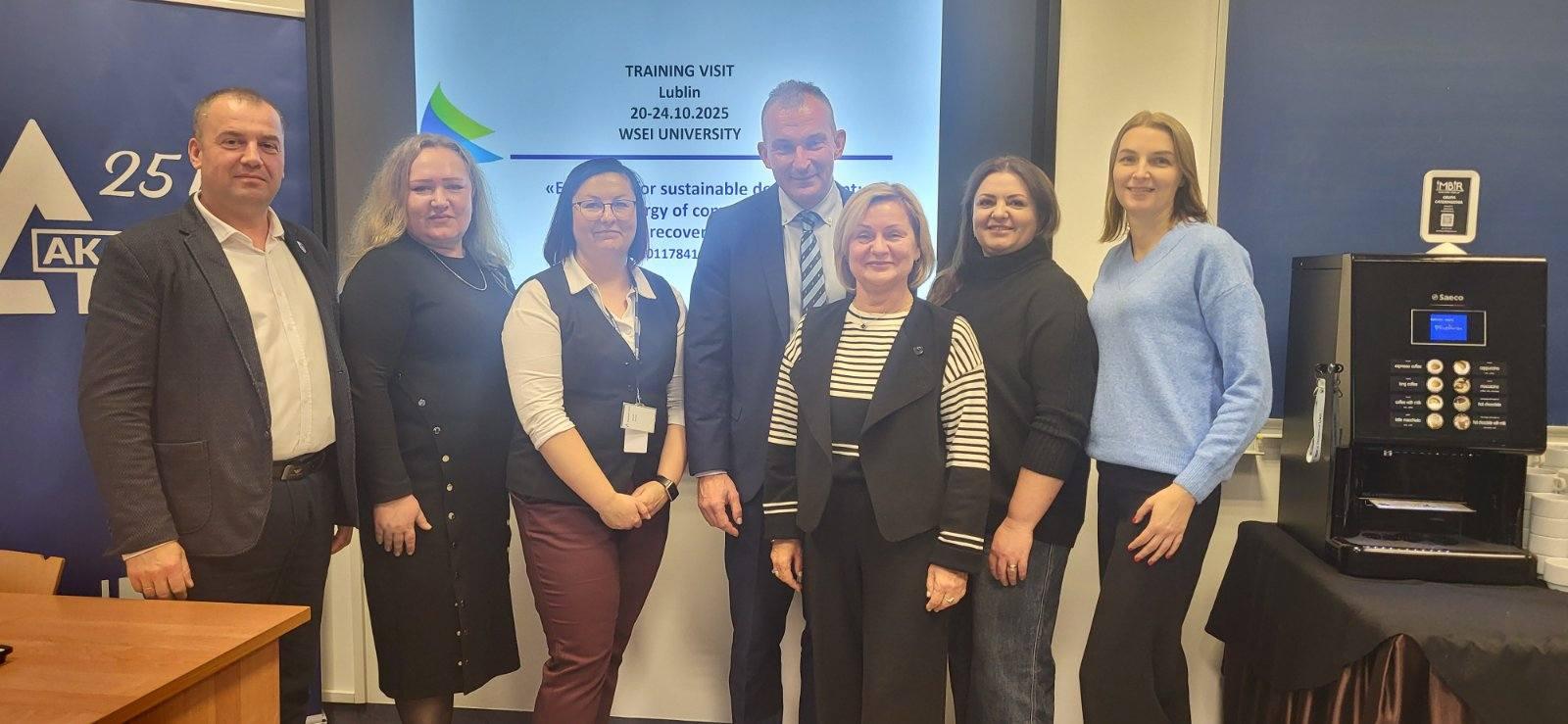
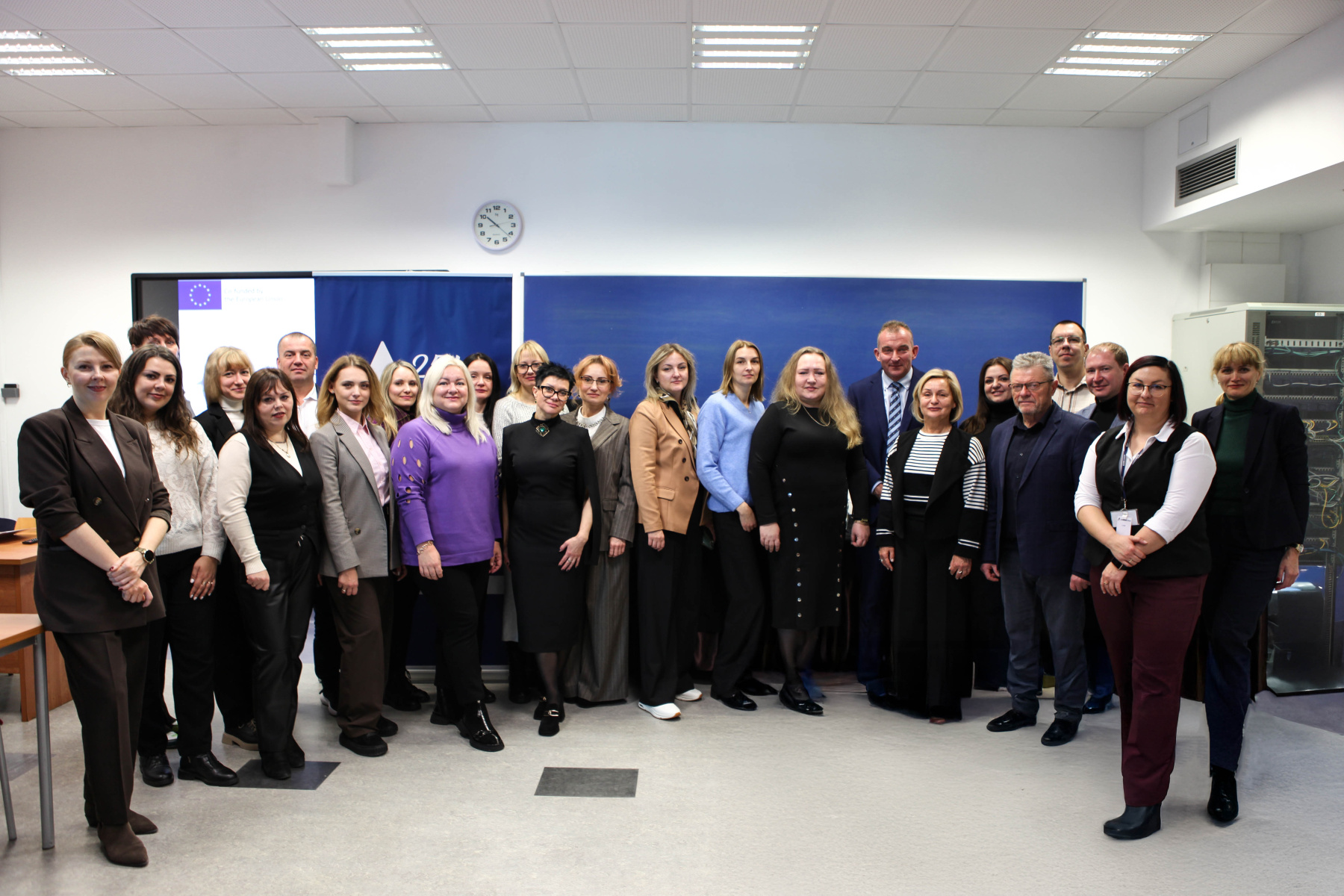
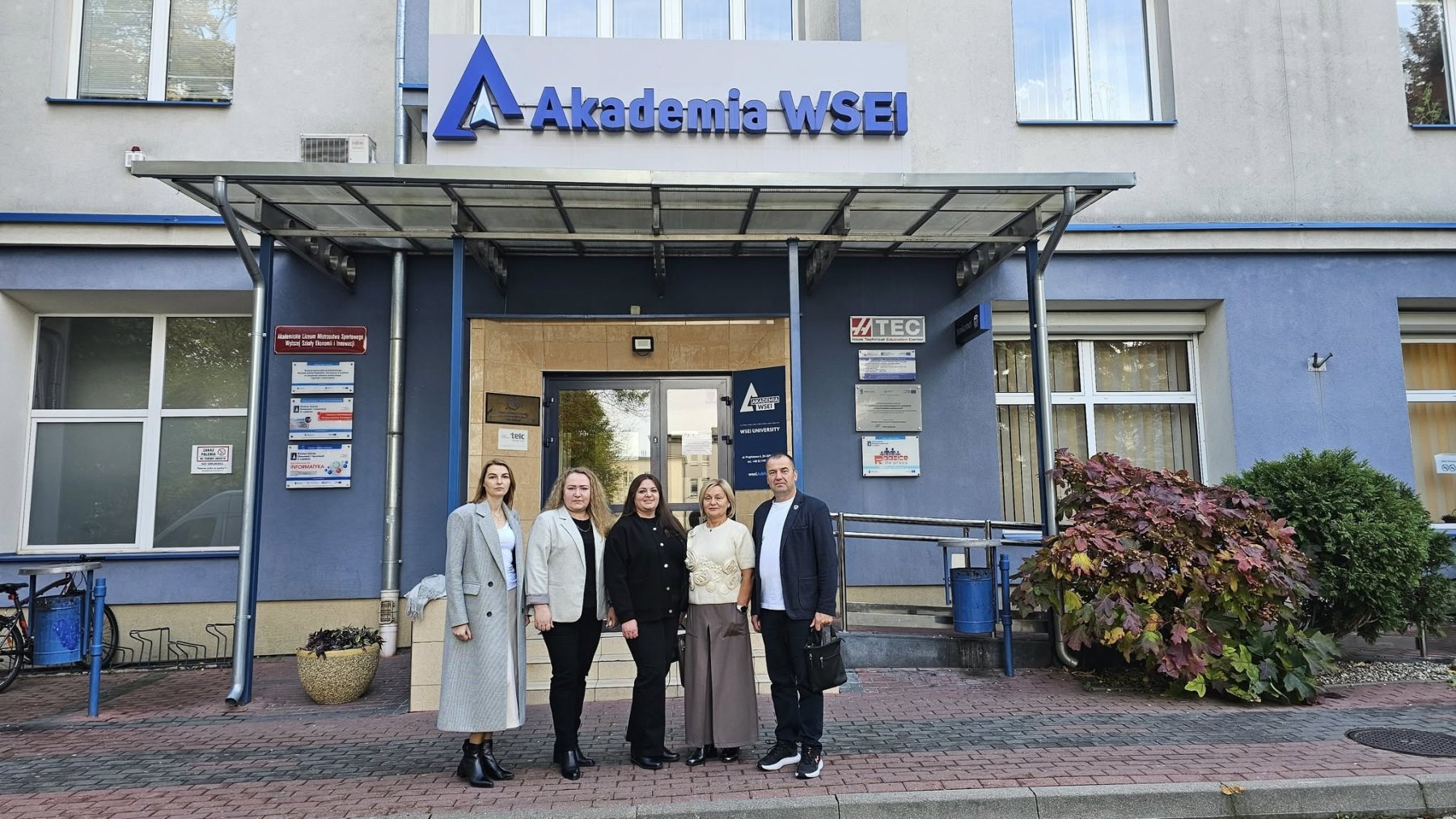
From 20 to 24 October 2025, representatives of four Ukrainian universities (Polissia National University, Chernihiv Polytechnic National University, Podillia State University, Volodymyr Dahl East Ukrainian National University and West Ukrainian National University) took part in a second training visit to the Lublin Academy of Economics and Innovation (WSEI, Poland) as part of the international project “Education for Sustainable Development: Synergy of Competences for the Recovery of Ukraine (SUSTED – 101178414)”, funded by the European Union. The purpose of the visit was to exchange experience, enhance institutional capacities, and develop joint educational and strategic approaches for implementing the principles of sustainable development in Ukrainian higher education.
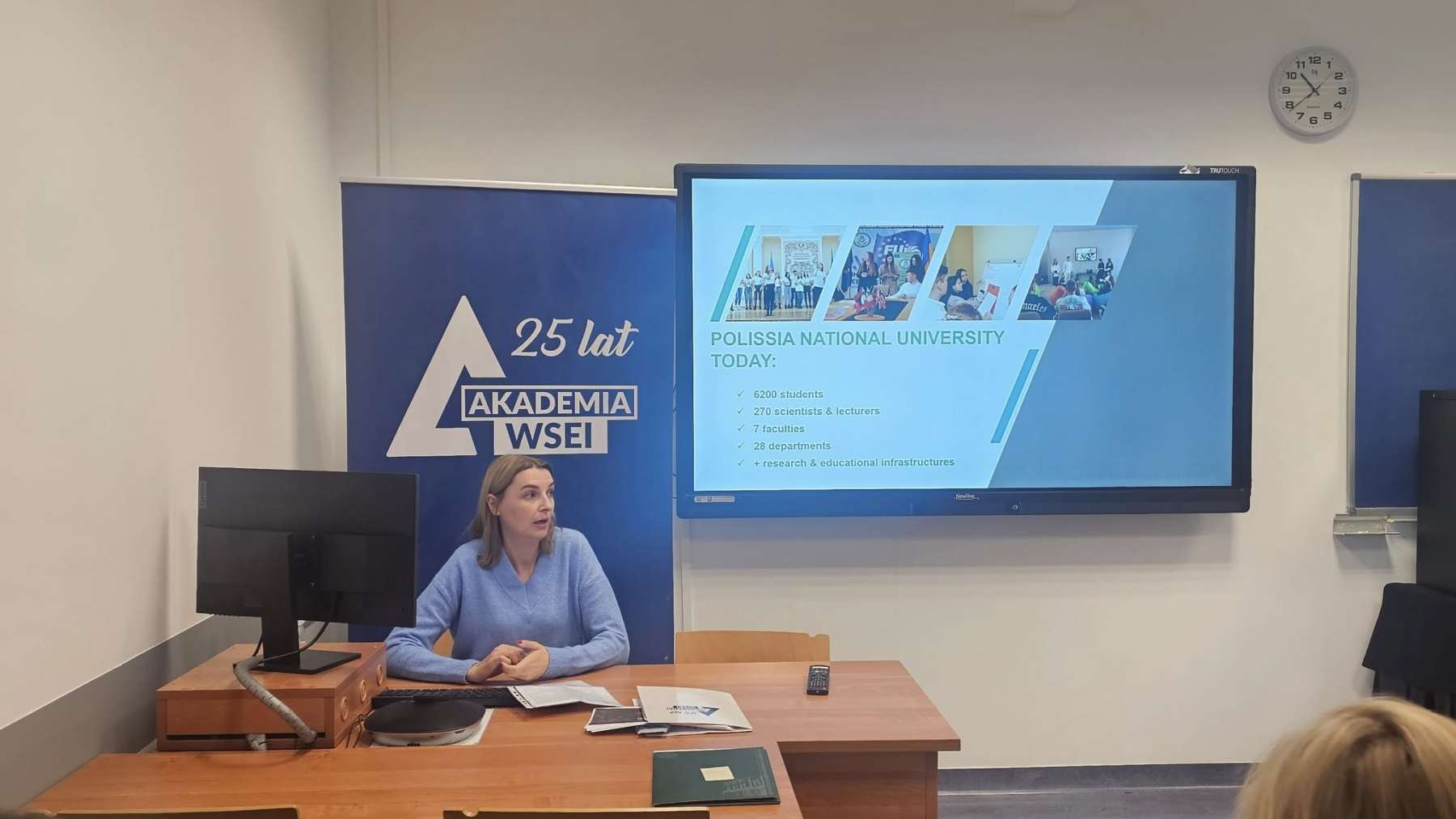
The visit began with a formal welcome of participants by representatives of the host University. Partner universities from Ukraine presented their institutional profiles, scientific priorities, and initiatives related to sustainable development. During this session, cooperation agreements were signed between WSEI and Ukrainian universities, expanding the network of collaboration within the SUSTED project.
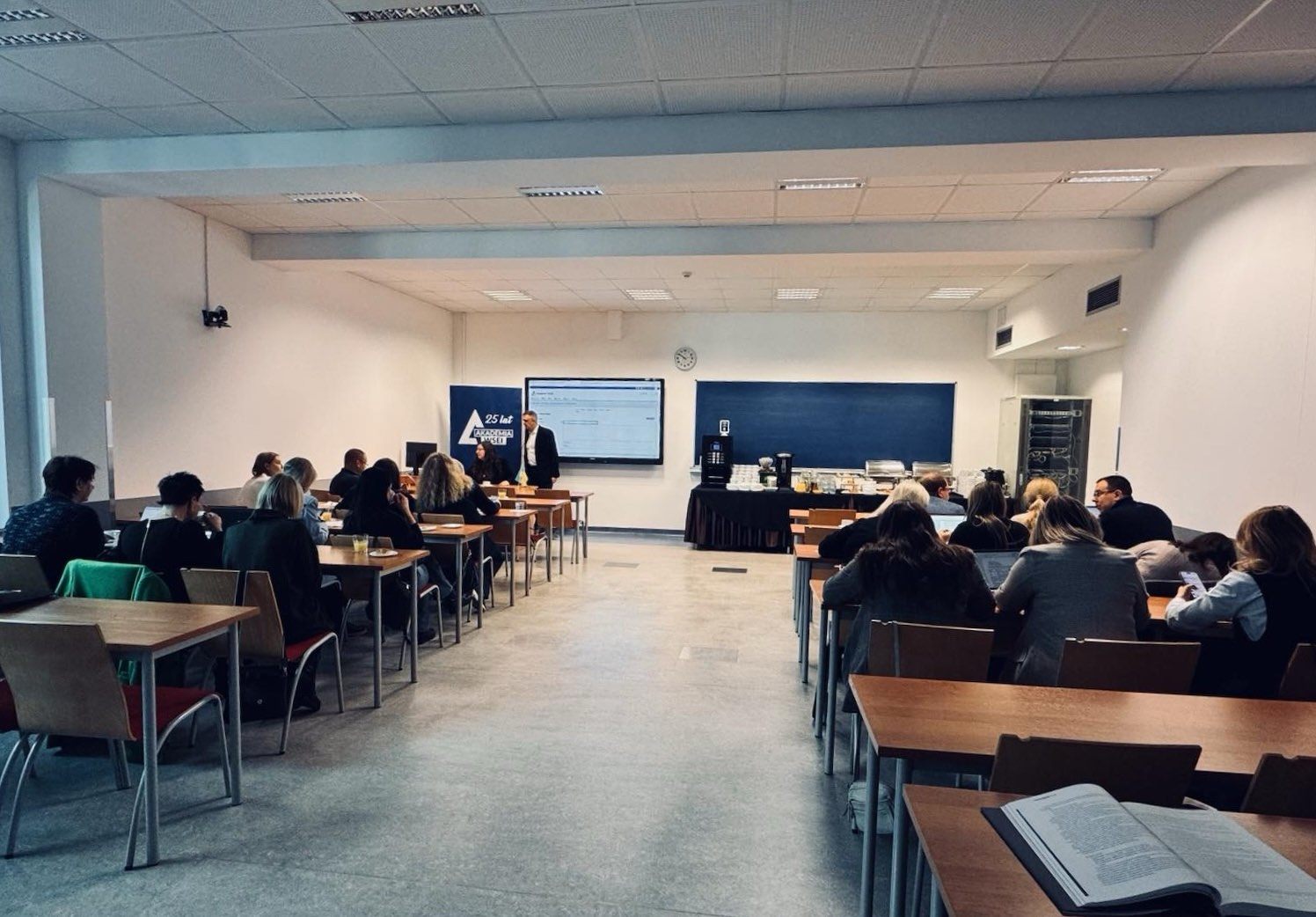
The training program was commenced with Module 1: “Introduction to the Concept of Sustainable Development and the Sustainable Development Goals (SDGs)”, conducted by Dr. hab. Tomasz Wołowiec, Professor at WSEI. The sessions focused on the theoretical foundations of sustainable development, the evolution of the SDG framework adopted by the United Nations, and their integration into economic, environmental, and social policies. Scientists discussed the interrelation between global sustainability goals and national recovery priorities for Ukraine, emphasizing education’s transformative role in achieving long-term resilience and inclusive growth.
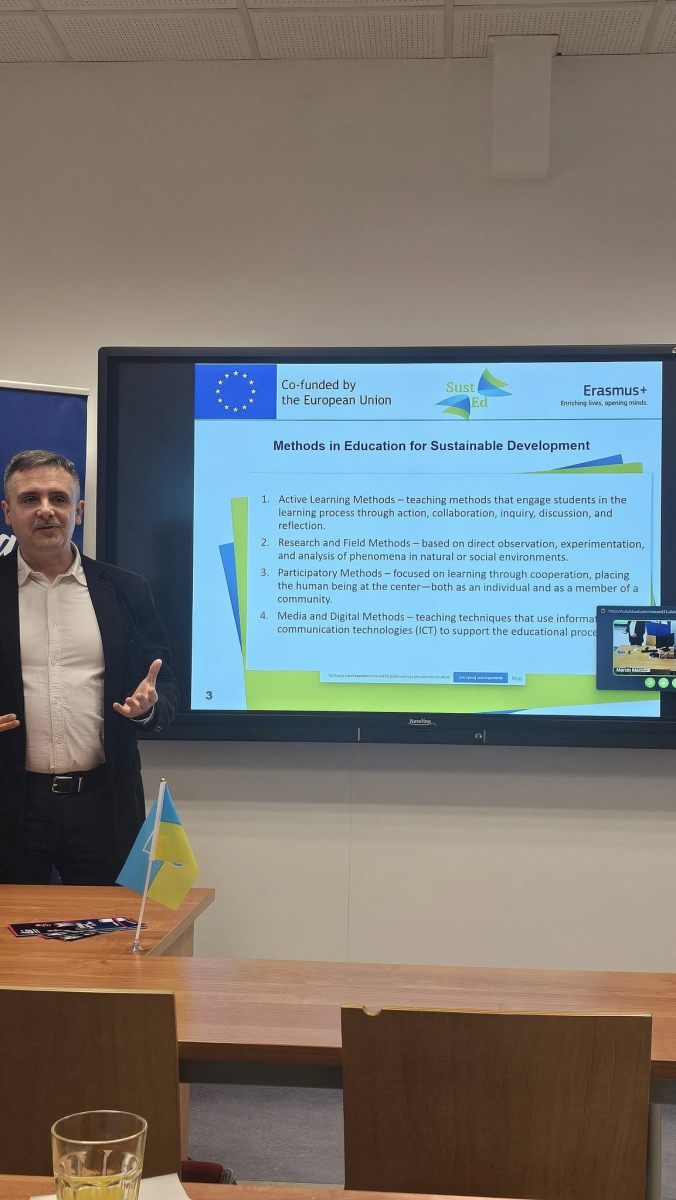
The second day was devoted to Module 2: “Teaching Methods and Tools in Education for Sustainable Development”, facilitated by Professor Marcin Marczuk. The third day focused on Module 3: “Monitoring, Evaluation, and Reporting of Sustainable Development Activities”, also conducted by Dr. Marcin Marczuk. The sessions introduced participants to analytical frameworks and performance indicators used for assessing institutional progress toward sustainability goals. The trainer presented best practices in data collection, impact measurement, and reporting in accordance with international standards such as the UN Agenda 2030 and the European Green Deal.
The fourth day was dedicated to Module 4: “Designing University Programmes and Strategies in the Field of SDGs”, led by the dean of the faculty Sylwia Skrzypek-Ahmed. The sessions explored institutional strategy development, emphasizing how universities can operationalize sustainability principles through academic programs, syllabuses and research projects. Following the morning training, participants attended the Export Congress, which brought together international experts, business leaders and academics. This event provided an opportunity for networking and exchanging best practices related to sustainable development in global export and logistics sectors. The congress highlighted the significance of sustainable trade, ethical supply chains, and green innovation for post-war reconstruction and economic resilience in Ukraine.
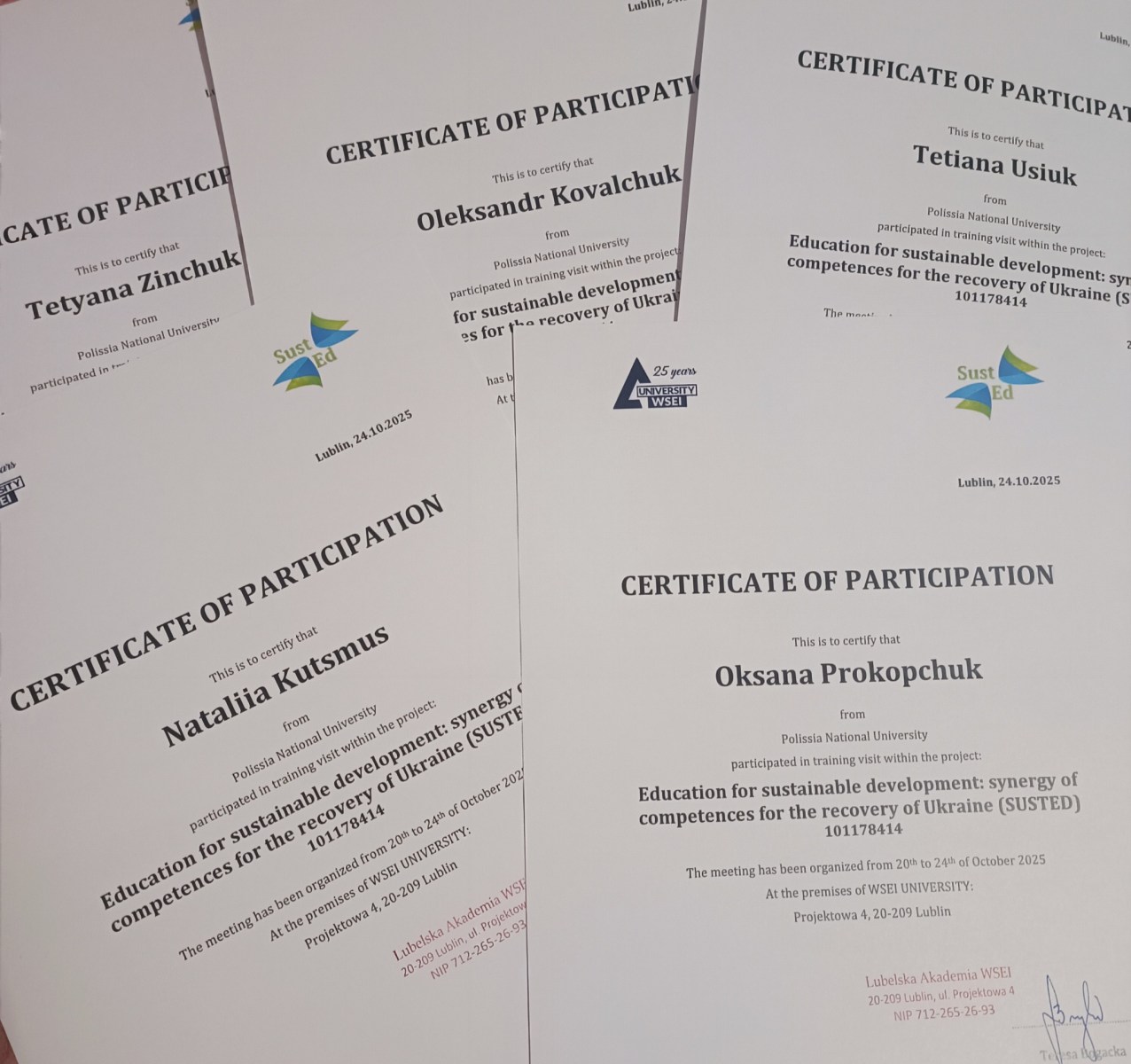
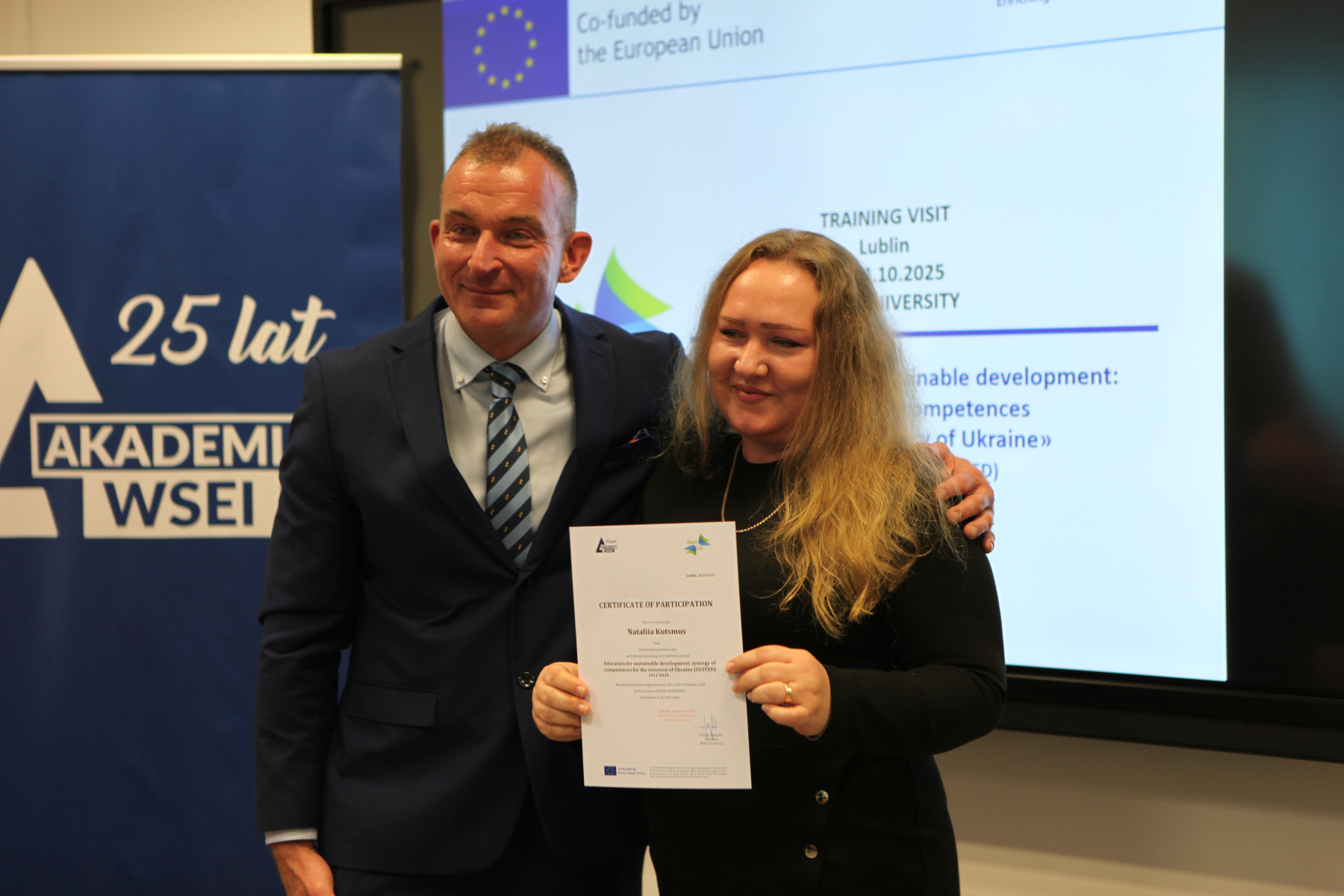
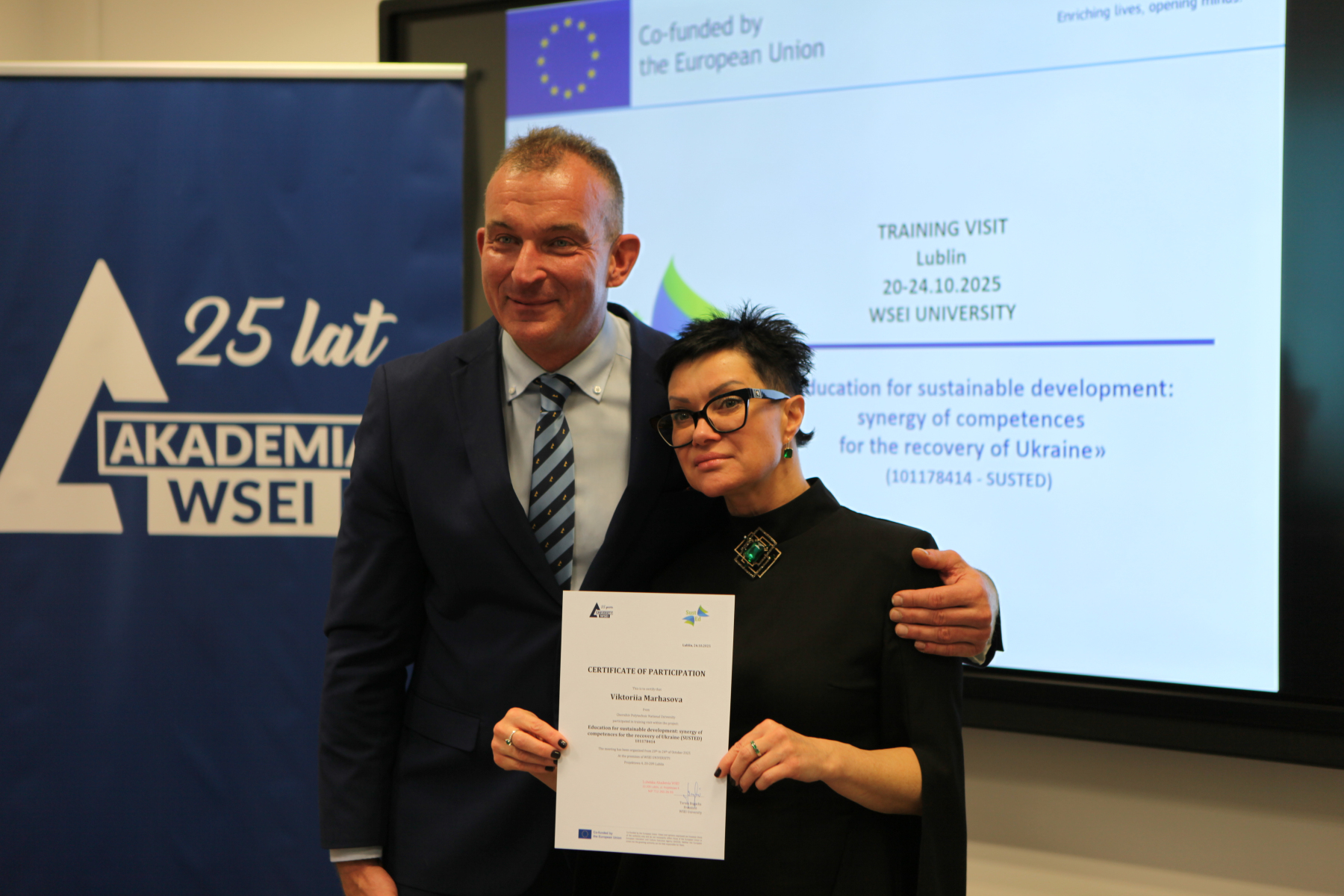
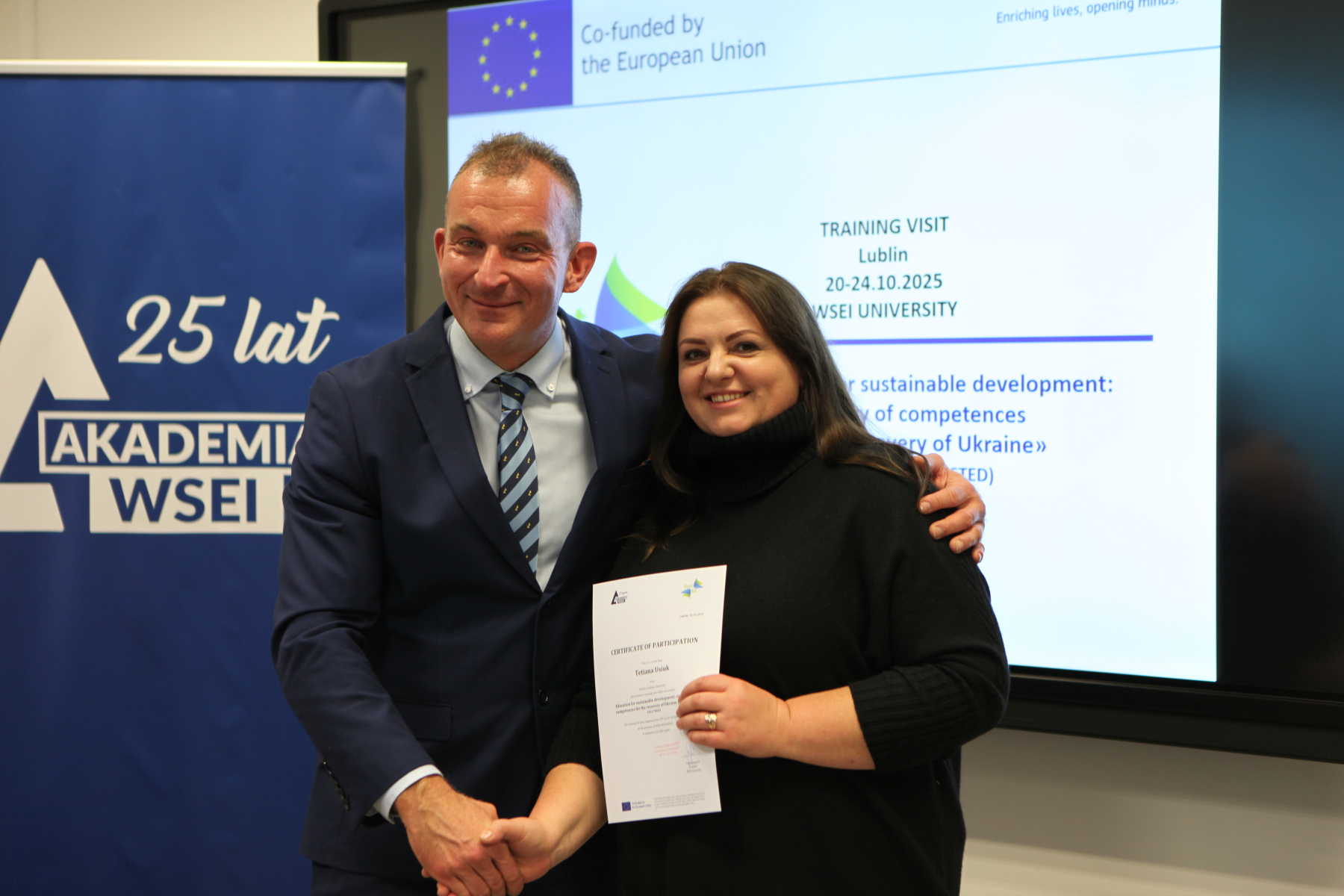
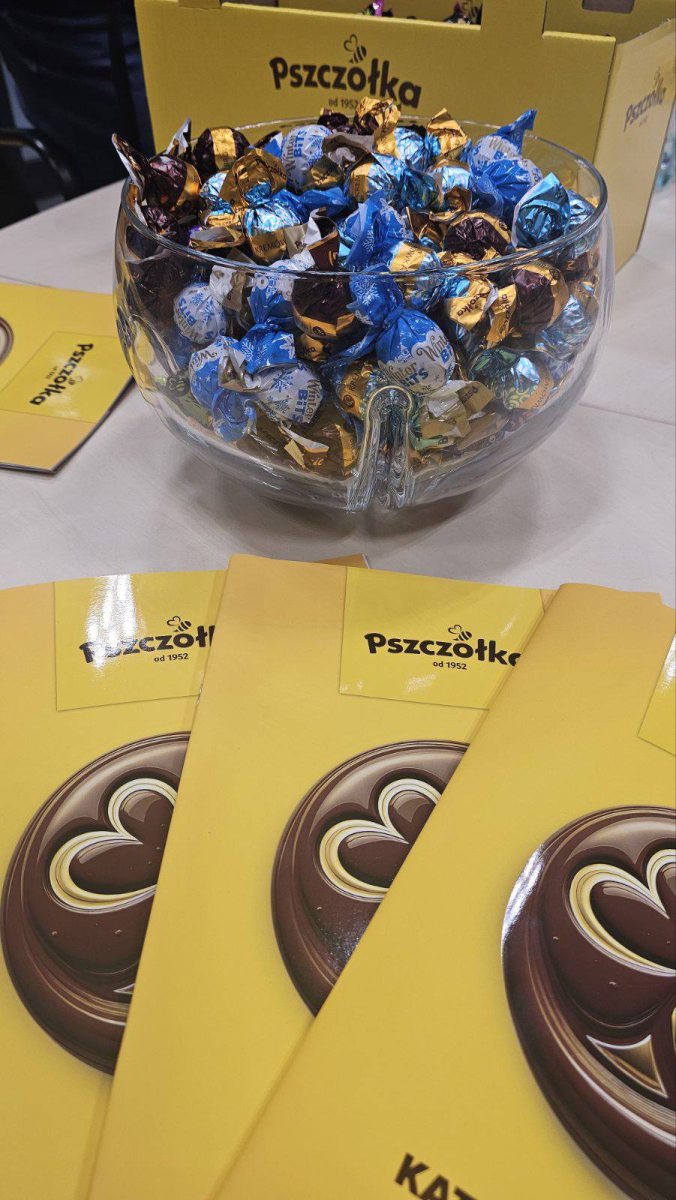
The final day of the visit continued Module 4 under the guidance of Dr. Sylwia Skrzypek-Ahmed, focusing on the practical design of institutional sustainability strategies. Participants collaboratively developed outlines for university-level SDG implementation plans, addressing curriculum reform, community engagement, and international cooperation. At the conclusion of the training, Certificates confirming participation in the program were distributed to all representatives of the Ukrainian partner universities. In the afternoon, the delegation visited the “Pszczółka” Confectionery Factory. The study visit offered insight into sustainable practices in industrial production and served as an example of how sustainability principles can be effectively integrated into the business sector.
So, the training visit to WSEI within the SUSTED project significantly contributed to strengthening the professional competences of Ukrainian university representatives in the field of sustainable development education. The program successfully combined theoretical learning, practical exercises, and real-world examples of sustainability implementation in academia and industry. Participants gained a comprehensive understanding of the conceptual and institutional foundations of sustainable development and the SDGs; innovative teaching methodologies for embedding sustainability into higher education; tools for monitoring, evaluating, and reporting sustainability performance; strategic planning approaches for developing SDG-oriented university programs. The outcomes of this visit will facilitate the adaptation of European best practices in Ukrainian universities, supporting the integration of sustainable development principles into education, research and community engagement.

Contacts